What people come for
Osteopath for digestive issues in Montreal
Bloating, reflux, slow digestion, a stomach that knots under stress. The belly is mobile: it moves with every breath, thousands of times a day. When that mobility is lost, digestion feels it, and that is exactly the ground an osteopath for digestive issues works on.
Organs that need to glide
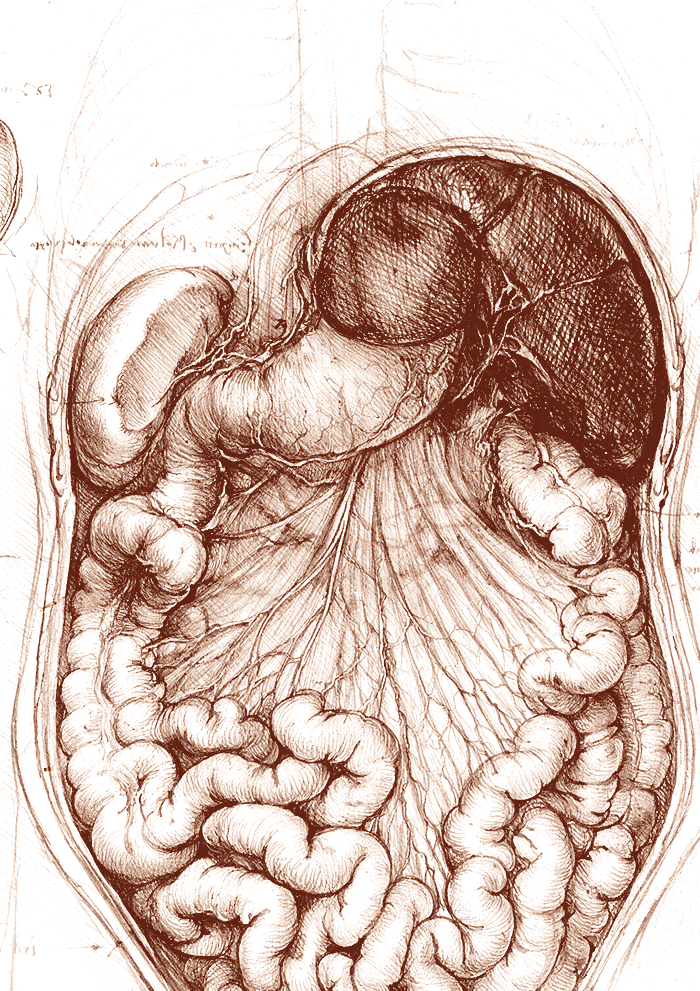
The viscera are not simply dropped into the abdomen. They are suspended, connected to each other and to the wall by membranes, and they glide over one another with every movement of the diaphragm. Old surgery, a scar, a period of inflammation or prolonged stress can reduce that glide.
When an organ loses mobility, the area tightens to compensate. That sometimes shows up in digestion, sometimes in the back, often in both, since the thoracic and lumbar vertebrae share their nerve supply with the organs they serve.
The diaphragm, what an osteopath for digestive issues aims at
The diaphragm separates the chest from the abdomen. It is the floor under the heart and lungs and the ceiling above the liver and stomach. It descends with every in-breath and massages the viscera on the way. High, short breathing, common under stress, deprives the belly of that massage.
This is where breathing meets digestion. Working the diaphragm and giving the breath its range back often changes digestive comfort, and it is one reason breathwork has a place in my practice.
The gut and the nervous system
Digestion only works properly at rest. The autonomic nervous system has to shift from alert to recovery for secretion, transit and absorption to happen normally. A nervous system on permanent alert digests badly, and that is mechanical before it is psychological.
I work on that shift through cranial technique and through the diaphragm, and you leave with something to keep it going between sessions.
A session with an osteopath for digestive issues
- We talk firstYour symptoms, their rhythm through the day, what you eat, past surgeries, your current stress load. What you are living through.
- I assess mobilityMobility of the diaphragm, liver, stomach and intestines, tension in the abdominal wall, and the back that goes with it. How you breathe.
- The manual workGentle visceral technique on the abdomen, work on the diaphragm and on the thoracic and lumbar spine according to what I find.
- What you do nextBelly breathing, meal rhythm, and if the subject interests you, what optimal nutrition can change. I impose no diet.
Reading on digestion
The gut is decided at the table as much as on the table. These pieces cover the food side, the one an osteopath for digestive issues does not replace.

36 Hour Fast: Complete Guide to Extended Fasting for Optimal Vitality
Giving the digestive system a real rest, and what that actually changes.

All about lectins and lectin-free Diet
Lectins, the gut wall, and what the research says.

Full Liquid Diet: Complete Guide to Benefits, Foods, and Safety
Liquid feeding and water fasting, with their limits.

Anti Inflammatory Diet Recipes: Complete Guide with Plant-Based and Ethical Animal-Based Options
Eating to lower inflammation, with real recipes.

Weston Price’s Paleo Diet for Teeth Health and Tooth Decay.
An older look at food, teeth and what it says about the gut.

Belly Breathing vs Chest Breathing: Benefits, Science, and Practice
Belly breathing, the one that massages the viscera with every breath.
What I get asked
Can an osteopath for digestive issues help my bloating?
The work is on mobility: of the diaphragm, of the viscera against each other, of the spine that shares their nerve supply. When bloating comes from lost mobility or a nervous system under constant tension, manual work often changes the comfort. When it comes from a food intolerance or a medical cause, that is where to look, and I will tell you so.
Is work on the belly painful?
No. Visceral technique is slow and low pressure, a long way from deep tissue massage. Some areas are tender, I tell you before going there and you can ask me to stop.
What does my back have to do with my digestion?
The thoracic and lumbar vertebrae share their nerve supply with the organs of the abdomen. Tension around an organ can read as back pain, and a stiff spine can hamper the work of the viscera. That is why an osteopath for digestive issues always looks at both.
Do I have to change how I eat?
I impose no diet. If the subject interests you we can talk about it: I have studied nutrition for a long time and I write about it. But osteopathy and food are two separate levers, and I do not blur the two roles.
An osteopath for digestive issues on the Plateau Mont-Royal
$130 + tax, receipt issued on the spot. Two minutes from Laurier metro.